Biko (Sticky Rice Cake with Coconut Caramel)
Glutinous rice cooked in coconut milk and dark brown sugar, pressed into a pan and crowned with latik and a glossy coconut caramel. A classic Filipino kakanin that is naturally pork-free.
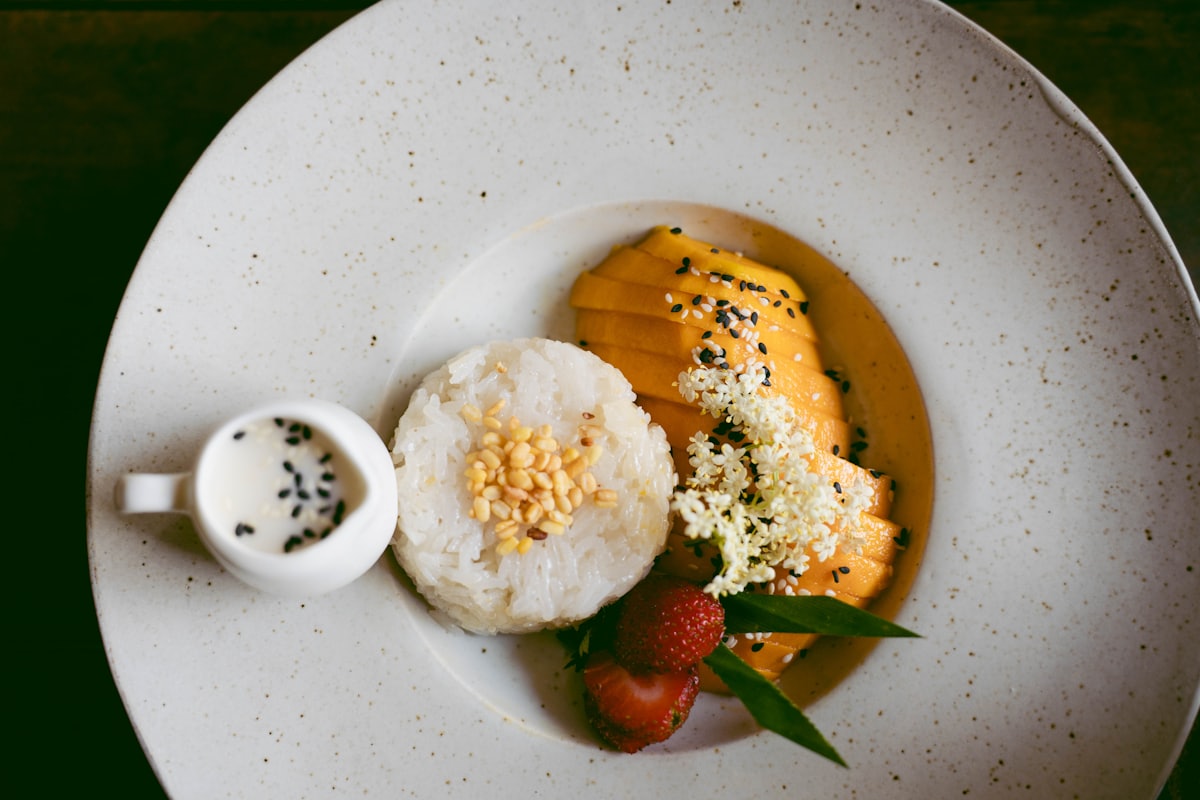
Ingredients
- 2 cups glutinous rice (malagkit), rinsed until the water runs clear
- 1 cup water, for cooking the rice, plus more for soaking
- 3 cups coconut milk (gata), divided
- 1 cup coconut cream (kakang gata), for the latik
- 1.5 cups dark muscovado or packed brown sugar (panutsa works beautifully)
- 1/4 tsp fine sea salt
- 2 pandan leaves, knotted, optional but worth it for the aroma
Method
- Rinse the glutinous rice, then soak it in cool water for at least 30 minutes, or up to overnight in the fridge. Drain well. Soaking softens the grains so they cook through evenly without a chalky center.
- Cook the rice: combine the drained rice, 1.5 cups of the coconut milk, 1 cup water, and the pandan leaves in a heavy pot. Bring to a boil, then lower to a bare simmer, cover, and cook for 18 to 20 minutes until the liquid is absorbed and the grains are tender but still hold their shape. Fluff, discard the pandan, and set aside.
- Make the latik while the rice cooks: pour the coconut cream into a small pan and simmer over medium heat, stirring often, for 15 to 20 minutes. The cream will bubble, then the oil will separate and the solids will turn into golden-brown curds. Strain, keeping both the curds (your latik) and the fragrant oil.
- Make the coconut caramel: in a wide, deep pan, combine the remaining 1.5 cups coconut milk, the brown sugar, and the salt. Simmer over medium heat, stirring, for about 10 minutes until it thickens into a dark, glossy caramel that coats the back of a spoon. Scoop out a few spoonfuls to glaze the top later.
- Fold the cooked rice into the caramel over low heat. Keep folding for about 5 minutes until every grain is coated and the mixture pulls away from the sides of the pan in a thick mass.
- Brush an 8 by 8 inch pan with a little of the reserved latik oil. Press the biko in firmly with the back of an oiled spoon into a smooth, even layer, then spread the reserved caramel over the top.
- Scatter the latik curds across the surface. For a set, faintly toasted top, bake at 175 C (350 F) for 12 to 15 minutes, or slide it under the broiler for 2 to 3 minutes, watching closely. Cool completely, at least 1 hour, before slicing into squares.
Biko is the sticky rice cake at the center of Filipino kakanin, the family of snacks and sweets built on glutinous rice and coconut. Whole grains of malagkit are simmered in coconut milk, folded into a dark caramel of brown sugar and more coconut, then pressed into a pan and topped with latik. It shows up at fiestas, merienda, and every long weekend where someone in the family decided the afternoon needed a treat. There is no pork or lard anywhere near it, so it fits halal and pork-avoiding kitchens with nothing to swap out.
Two things make or break a batch. The first is the rice: soak it, and cook it just until tender so the finished cake is chewy rather than mushy or hard. The second is the latik. Slow-rendered coconut cream gives you both the golden curds for the top and a nutty oil for greasing the pan, and that toasty flavor is what separates real biko from plain sweet rice.
Cook’s notes
- Doneness: the caramel is ready when it coats a spoon and the biko pulls cleanly from the sides of the pan as you fold. If it still looks loose, keep going on low heat for another minute or two.
- Sugar swaps: muscovado or panutsa gives the deepest color and molasses note. Regular brown sugar works and stays a shade lighter. Avoid white sugar here, since the color and flavor are the point.
- No coconut cream for latik? Reduce an extra 1 cup of coconut milk the same way, or simply spread all of the reserved caramel on top and skip the curds.
- Make ahead: biko keeps at room temperature, covered, for two days and in the fridge for about five. Bring cold squares back to soft with 10 seconds in the microwave or a few minutes in a warm oven.
- Pandan: fresh or frozen knotted leaves add the classic aroma. A drop of pandan extract works in a pinch, but add it sparingly.
Once you are comfortable cooking down gata like this, the same coconut milk technique carries into savory territory in our ginataang gulay, and you can line up biko next to the rest of our Filipino desserts for a merienda spread. Every recipe on Ayoko ng Baboy follows the same rule: real Filipino food, cooked without pork.
Sources
Checked against
Sticky rice is forgiving, but the storage window at the end of the notes is a claim like any other, so here is what it rests on.
- FoodSafety.gov, for how long a cooked rice cake keeps at room temperature and in the fridge.
- DOST Food and Nutrition Research Institute (Philippines), for Philippine composition data on glutinous rice and coconut.
- USDA FoodData Central, for the composition of coconut milk and brown sugar.