Chicken Adobo (Pork-Free Adobong Manok)
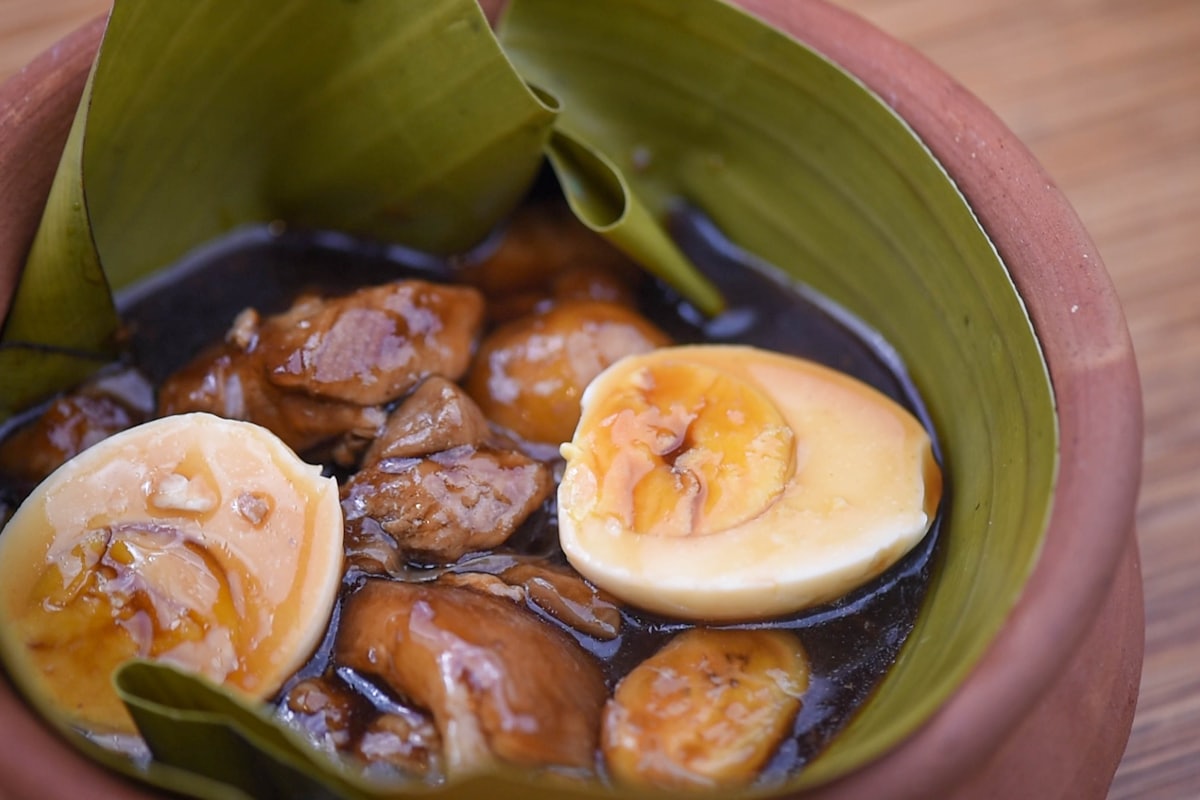
The all-chicken take on the Philippine national dish. Bone-in chicken braised in vinegar, soy sauce, garlic, bay, and peppercorns until the sauce turns dark and glossy. No pork, no shortcuts.
Ingredients
- 1.3 kg bone-in, skin-on chicken thighs and drumsticks
- 1/2 cup cane vinegar (sukang maasim) or coconut vinegar
- 1/3 cup soy sauce (toyo)
- 1 whole head garlic, cloves peeled and lightly crushed
- 5 dried bay leaves
- 1 tbsp whole black peppercorns, lightly cracked
- 1 cup water
- 2 tbsp neutral oil
- 1 tbsp brown sugar, optional, to balance the tang
Method
- Marinate the chicken with the soy sauce, half of the crushed garlic, and the cracked peppercorns for at least 30 minutes at room temperature, or up to overnight in the fridge. Turn the pieces once so they soak evenly.
- Heat the oil in a heavy pot or wide pan over medium-high. Lift the chicken out of the marinade and keep the marinade for later. Sear the pieces skin-side down until deep golden, about 4 minutes per side, working in batches so they brown instead of steam.
- Push the chicken to one side, add the remaining garlic, and cook for 30 seconds until it smells toasty and sweet.
- Pour in the reserved marinade, the vinegar, water, and bay leaves. Do not stir. Bring it to a full boil and let it bubble undisturbed for 3 to 4 minutes so the sharp raw edge of the vinegar cooks off.
- Now stir once to settle everything, lower the heat to a gentle simmer, and cover. Cook for 25 minutes, turning the chicken halfway, until the meat is tender and pulls easily from the bone.
- Uncover, stir in the brown sugar if using, and raise the heat to medium. Reduce the sauce for 8 to 10 minutes, spooning it over the chicken, until it turns dark, thick, and glossy enough to coat the back of a spoon.
- Taste and adjust with a splash more vinegar for brightness or soy sauce for salt. Rest off the heat for 5 minutes, then serve hot over steamed rice with plenty of sauce.
Adobo is the dish most people assume needs pork belly. It does not. Adobong manok, the all-chicken version, is just as much a part of everyday Filipino cooking, and it lets the real backbone of adobo do the work: vinegar, soy sauce, garlic, bay leaf, and black pepper simmered down until the sauce is dark and clings to every piece. Bone-in, skin-on chicken gives the sauce enough body that you never miss the pork fat.
The one technique that separates good adobo from flat, sour adobo is how you treat the vinegar. When it goes into the pot, let it come to a hard boil and leave it alone. Stirring raw vinegar into the braise too early locks in a harsh, uncooked tang. A few minutes of boiling burns off that sharpness and leaves the mellow, savory depth you want.
Cook’s notes
- Doneness: the chicken is ready when a drumstick twists cleanly at the joint and the sauce coats a spoon. If it still looks thin, keep reducing uncovered.
- Vinegar swaps: cane or coconut vinegar is traditional. Plain white vinegar works but is sharper, so start with a little less and add more at the end.
- Make it richer: a spoon of the sauce over rice is the whole point, so do not over-reduce. Stop while there is still enough to pour.
- Make ahead: adobo is one of the rare dishes that is better the next day. Cool it, refrigerate, and reheat gently. The flavor settles deeper into the meat overnight.
- Halal and pork-free by design: nothing here is pig-derived, so it fits halal and pork-avoiding kitchens without any substitution.
Once you have this down, the same vinegar-and-soy method carries over to seafood in our fish escabeche and to a heartier braise in beef kaldereta. Every recipe on Ayoko ng Baboy follows the same rule: classic Filipino food, cooked without pork.
Questions about this recipe
Can I make this with beef instead of chicken?
Yes. Beef adobo (adobong baka) works with the same marinade and method, but use beef chuck or shank and simmer it for 60 to 90 minutes, until the meat is fork-tender. Chicken adobo is the faster weeknight version; beef is the slow Sunday one.
What is adobo sa gata, and can I add coconut milk here?
Adobo sa gata is adobo finished with coconut milk, a regional variation from Bicol. To turn this recipe into one, stir in half a can of coconut milk after the covered simmer and let it reduce with the sauce. The gata rounds the vinegar tang and gives the pot a creamy backbone.
How long does chicken adobo keep in the fridge?
It keeps for 3 to 4 days covered in the fridge and is genuinely better the next day, since the vinegar acts as a mild preservative and the flavor settles deeper into the meat overnight. Reheat it gently on the stove with a splash of water.
What do I serve with chicken adobo?
Steamed jasmine rice is non-negotiable for most tables, since the sauce is the point. For breakfast, pile the adobo over garlic fried rice (sinangag) with a fried egg on top, which turns it into an adobo-silog plate.
Sources
What this recipe leans on
The cooking above is standard adobo. The parts that are not a matter of taste, how hot the chicken has to get and how long the pot keeps once it is cold, come from the guidance below rather than from us.
- USDA Food Safety and Inspection Service, for safe minimum internal temperatures and for handling raw poultry.
- FoodSafety.gov, for how long cooked leftovers keep in the fridge and how to reheat them.
- USDA FoodData Central, for the composition of chicken, soy sauce, and vinegar, since this site prints no nutrition panel of its own.